
Christopher Columbus Identified As A Portuguese Prince In New Investigation
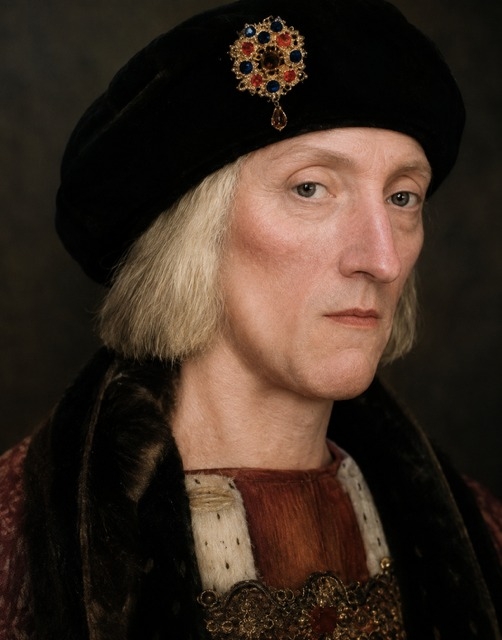
Portugal – 28 September, 2026 – The new book, COLOMBO — Um Príncipe Português (COLUMBUS — A Portuguese Prince), published by Alma dos Livros, approaches the 500-year-old mystery like a criminal cold-case investigation, testing evidence, identities, timelines, and documentary claims. The 35-year-long inquiry was conducted by Portuguese-American historian Manuel Rosa, who holds a PhD in Insular and Atlantic History (15th–20th centuries).
At the center of the investigation is a fundamental historical question: What evidence proves that Cristoforo Colombo, a plebeian weaver from Genoa, and the noble Don Cristóbal Colón, Admiral and Viceroy in Castile, were the same man?
The research compared royal letters, court proceedings, genealogies, chronicles, heraldry, and other archival evidence associated with the two men. It concludes that there are incompatibilities across multiple categories and that no continuous documentary chain connects the Genoese weaver to the Castilian viceroy who, within the rigid legal and sociopolitical structures of the time, married a high-ranking Portuguese noblewoman from Madeira in 1479.
Rather than beginning with the centuries-old question of where Columbus was born, the investigation tests whether Cristoforo Colombo and Don Cristóbal Colón were actually the same person. When the evidence is tested against the documentary record, an entirely different identity emerges: Segismundo Henriques, a Portuguese prince of Polish-Lithuanian ancestry born at Madalena do Mar on Madeira in 1456.
According to the evidence presented in the book, Segismundo’s parents were Senhorinha Annes and Henrique Alemão, whom early Portuguese archival documents identify as King Władysław III of Poland. Traditional accounts record Władysław as having died at the Battle of Varna in 1444. The investigation, however, argues that the documentary evidence never established that the king died at Varna, only that he disappeared during the 1444 battle. It also brings forward private communications from 1445 between the courts of Emperor Frederick III and Queen Mother Sophia of Poland reporting that her son was alive and being held captive with nine companions.
The investigation draws on primary sources preserved in archives across Europe, including a 1445 Budapest letter, a 1472 German document, a 1487 payment receipt from Queen Isabella’s court describing the discoverer as “Portuguese,” and a 1666 genealogy preserved in Lithuania. Together with royal correspondence, genealogical evidence, court records, chronology, and heraldry, these documents form the basis for the investigation’s reconstruction of the navigator’s royal identity and lineage.
The research has also received academic attention. João Paulo Oliveira e Costa, full professor at NOVA University Lisbon and supervisor of Rosa’s doctoral dissertation, described the work as “a landmark in Portuguese historiography,” concluding: “The navigator was necessarily born in Portugal and necessarily a nobleman. Regardless of what other historians claim, it is impossible for the discoverer to have been the Genoese weaver.”
The investigation also extends beyond documentary evidence to genetics. DNA studies were undertaken in collaboration with the University of Granada as part of international efforts to resolve the mystery of the admiral’s origins.
“For five centuries, we have tried to discover who the navigator was. The truth had a name condemned to silence—until someone decided to look for it. COLOMBO — Um Príncipe Português is more than a theory. It is an answer grounded in documentary evidence.” — Manuel Rosa
LISBON BOOK PRESENTATION — OCTOBER 1
COLOMBO — Um Príncipe Português
Author: Manuel RosaDate: Thursday, October 1, 2026
Time: 7:00 p.m.Location: Casa dos Açores, Lisbon, Portugal
Publisher: Alma dos Livros
Admission: Free
ABOUT THE AUTHOR
Dr. Manuel Rosa is an award-winning Portuguese-American historian and investigative researcher specializing in the history and identity of Christopher Columbus. He holds a PhD in Insular and Atlantic History (15th–20th centuries) from the University of the Azores and has spent more than 35 years investigating the documentary record surrounding Columbus’s identity. His research has been published internationally and has received awards in the United States and Poland.
Media Contact: Bruno Sancci
Radio Chubut – LU20, Patagonia, Argentina, 9100
Email: [email protected]
Phone: +54 280 459-2884 | +54 9 280 429-8898
Web: radiochubut.com
Media Contact
Company Name: Bruno Sancci
Contact Person: Media Contact
Email: Send Email
Country: Portugal
Website: radiochubut.com


